

The Olympic Games (often referred to simply as the Olympics) constitute the world's most prestigious multi-sport event. Held once every four years, the Games attract participation from 201 countries and regions, and winning a gold medal remains the cherished dream of countless athletes. As a global spectacle, the Olympic Games embody humanity's unceasing pursuit of peace, friendship, and excellence. Their history is deep and enduring—much, much like a ceaselessly flowing river—bearing witness to the development and progress of human civilization.
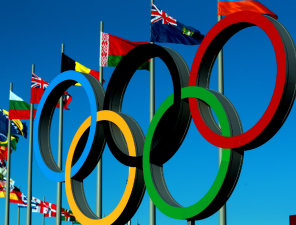
The Ancient Olympic Games originated in Ancient Greece, serving as a public contest between the various city-states of the era; they derived their name from their host city, Olympia. However, the Christian Roman Emperor Theodosius I banned the Olympic competitions on the grounds that they involved the worship of deities other than Jesus. Consequently, after more than a millennium of existence, the Games were discontinued at the end of the 4th century. This hiatus lasted for 1,503 years, until the ruins of the site were rediscovered by later generations in the late 19th century. Subsequently, the French educator and sports advocate Baron Pierre de Coubertin—along with his associates—spearheaded the establishment of the International Olympic Committee and the revival of the Games as the Modern Olympics. Since 1896, the Games have been held every four years, establishing a tradition wherein the duration of the event does not exceed 18 days.
History of the Olympic Games
As early as the Mycenaean era, Olympia was already inhabited and undergoing development; at that time, it served primarily as a religious sanctuary, with its architecture and ruins dating back to the Geometric and Early Archaic periods. The Olympic festivities were held once every four years, spanning five days, and took place during the "Sacred Truce" of late summer—a ceasefire observed by all Greek city-states. In terms of prestige and significance, the Olympic Games rivaled the Pythian Games held at Delphi, the Nemean Games at Nemea, and the Isthmian Games at Corinth. Official records designate the year 776 BC as the date of the first Olympic Games, when Coroebus—a cook hailing from the nearby city of Elis—won the stadion race, a sprint covering a distance of 600 feet. However, contradictory evidence from literary and archaeological sources suggests that these games may have existed at Olympia as a local festival much earlier—perhaps as early as the 10th or 9th century BCE. Typically hosted by the Eleans, the Olympic Games served as an occasion for citizens from scattered Greek city-states to gather. There, they discussed important political issues, celebrated shared military victories, and even forged political and military alliances. Yet, the Games were also a source of political conflict; control over the sanctuary and the athletic contests brought prestige, economic advantage, and—most importantly—political influence. A notable example is the Arcadian invasion of 364 BCE, which resulted in a battle unfolding right before the eyes of the spectators. With Olympia ultimately falling under Arcadian control, the Eleans declared 364 BCE a year of Olympic truce. Although the Olympic Games continued to enjoy a certain level of prestige, political and economic shifts during the Hellenistic and Roman periods took their toll on both the sanctuary and the contests. City-states plundered Olympia to fund their wars, until 394 CE, when Emperor Theodosius I abolished the Games, deeming them reminiscent of paganism. Thirty years later, Theodosius II ordered the destruction of the temples at Olympia and the construction of a Christian basilica on the site. Ultimately, earthquakes and landslides devastated Olympia, while repeated flooding of the Alpheus and Cladeus rivers buried the entire site. This vast complex remained lost for nearly a millennium until it was rediscovered and excavated from beneath 16 feet of yellow silt.
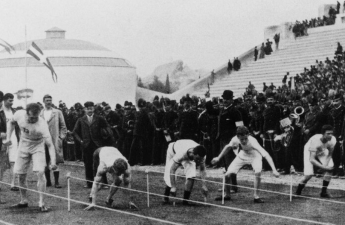
The Discovery of the Olympic Games
Excavations of the temple precinct at Olympia and its surrounding areas began in 1829 with a French expedition and were subsequently continued by the German-born archaeologist Ernst Curtius. Curtius’s work was remarkably systematic. Between 1875 and 1881, nearly the entire region of Olympia was excavated, revealing some of the most exquisite works of art from the ancient Greek world. In addition to a vast number of coins and inscriptions, Curtius discovered the remarkably well-preserved statue of Hermes Carrying the Infant Dionysus, created by Praxiteles. Curtius also uncovered the ruins of the Temple of Hera, the Altar of Zeus, and the site of the colossal Statue of Zeus (one of the Seven Wonders of the Ancient World), as well as the original location of the Olympic Stadium—the very place where the ancient Greeks held the Olympic Games. This scientific expedition—the largest of its kind at the time, and one of the most extensive archaeological undertakings in history—was funded by the German government and led by Curtius, with the assistance and support of the era's most distinguished archaeologists, including Friedrich Adler and Wilhelm Dörpfeld. After six years of excavation, most of the structures described by Pausanias had been cleared and identified, including the Heraion, the Temple of Zeus, the Metroon (Sanctuary of the Mother Goddess), the Philippeion, the Precinct of Pelops, and the Echo Colonnade. In accordance with an agreement signed between the Greek and German governments, the artifacts recovered by the expedition were to remain in Greece; however, most of the largest sculptures had already been looted in antiquity—primarily by the Romans.
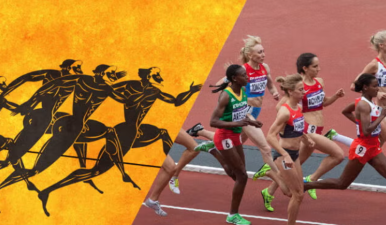
The Revival of the Modern Olympic Games
- Key Figure: The French educator Pierre de Coubertin championed the revival of the Olympic Games in the late 19th century, advocating for the use of sports to promote peace and youth education.
- Founding of the IOC: On June 23, 1894, during an international sports conference held at the Sorbonne in Paris, the decision was made to establish the International Olympic Committee (IOC), and Athens was selected as the host city for the inaugural modern Olympic Games.
- The First Modern Olympics: Held in Athens, Greece, on April 6, 1896, this event marked the official birth of the modern Olympic movement.
Conclusion
The Olympic Movement is far more than mere competitive sport; it exerts a profound influence across various spheres of contemporary society—including politics, economics, and culture. The values it champions—such, such as fairness, justice, friendship, and mutual assistance—form, form the very core of modern sports culture, inspiring countless individuals to strive for higher goals. Looking ahead, as global sports continue to evolve and new events are introduced, the Olympic Games will undoubtedly continue to wield significant international influence.